
Motorola Moto G Max Launches in India With a 7,000mAh Battery, 120Hz Display and Snapdragon 6s Gen 4
Motorola has launched the Moto G Max in India, adding a battery-focused mid-ranger to its G-series lineup that leans on a 7,000mAh silicon-carbon cell, a 120Hz LCD display and a fresh Snapdragon 6s Gen 4 chipset. Priced at ₹27,999 for its sole 6GB RAM plus 128GB storage configuration, the phone goes on sale from August 20 through Flipkart, Motorola’s own website and retail stores across the country, with an instant bank discount bringing the effective price down to ₹26,999.
The launch places the Moto G Max squarely in one of the most competitive corners of the Indian smartphone market: sub-₹30,000 phones built around all-day, and in this case multi-day, battery life. Motorola is betting that buyers exhausted by daily charging routines will pay a premium for a bigger cell, and it has paired that pitch with a 50-megapixel Sony Lytia 600 camera, a 120Hz display rated for 1,050 nits of peak brightness, and a durability package that includes Gorilla Glass 7i and MIL-STD-810H certification.
It is worth flagging upfront that Motorola has used the “Moto G Max” name for two genuinely different phones this year. A global variant launched in Brazil in June 2026 with a 6.8-inch AMOLED display, a MediaTek Dimensity chipset, a 200-megapixel camera and a 5,200mAh battery. The phone launching in India this week is a separate device built around the Snapdragon 6s Gen 4, a smaller 6.72-inch LCD panel, a 50-megapixel primary camera and the larger 7,000mAh battery. This article covers the Indian model exclusively, since that is the version relevant to buyers in this market — but it is a useful reminder that “Moto G Max” specifications found online can vary sharply depending on which region a source is describing.
For a segment where most phones in this price band play it safe with familiar Snapdragon 6-series or Dimensity chips and 5,000mAh batteries, the Moto G Max’s battery capacity is the headline number that will draw attention. Whether the rest of the package holds up is a separate question, and one worth examining feature by feature.
Motorola Moto G Max Officially Launches
Motorola positions the Moto G Max as the camera-and-battery flagship of its budget-friendly G series, sitting above phones like the Moto G77 Power in ambition even as the two devices share a similar 7,000mAh battery capacity and 6.72-inch display size. The G Max’s move to a Qualcomm Snapdragon 6s Gen 4 chipset, rather than the MediaTek silicon Motorola has favored in several recent G-series phones, is one of its more notable internal changes.
The timing lines up with a broader trend in the Indian market this year. Rivals including Realme and Redmi have also been pushing 7,000mAh-plus batteries into the mid-range segment, and Motorola’s own G77 Power launched just weeks earlier with an identical battery capacity at a lower price. Launching the G Max into that environment signals Motorola wants a foothold in the “big battery” conversation at a slightly higher price tier, differentiated primarily by its camera hardware and newer processor rather than by battery size alone.
Motorola Moto G Max Price and Availability
The Moto G Max is available in India in a single configuration — 6GB of RAM paired with 128GB of storage — priced at ₹27,999. Motorola is offering a ₹1,000 instant discount for buyers using eligible Axis Bank and ICICI Bank cards, bringing the effective price to ₹26,999 during the launch window. Sales begin August 20, 2026, through Flipkart, Motorola’s own website, and authorized retail stores nationwide.
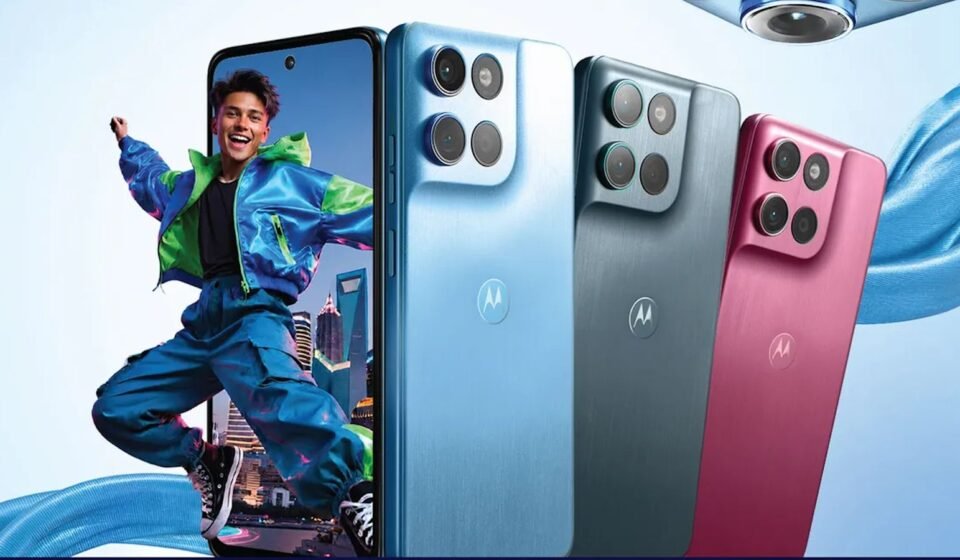
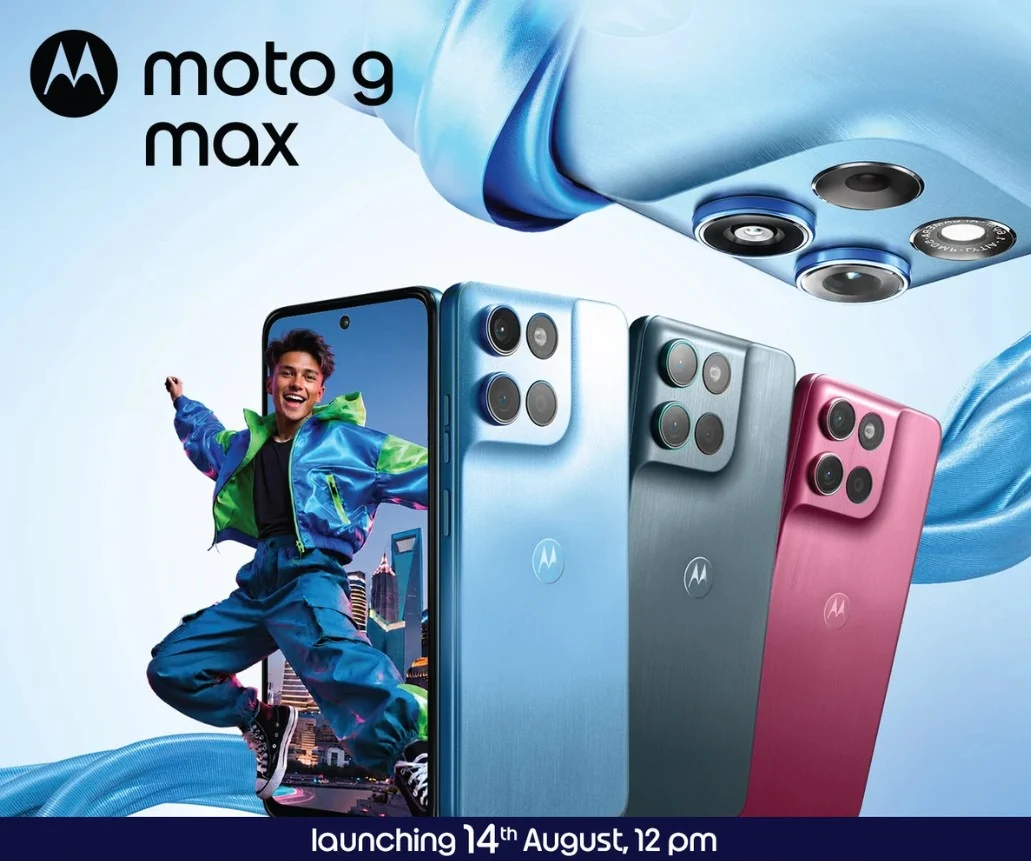
The phone ships in three Pantone-branded color options: Stargazer, Alaskan Blue and Malaga. Motorola is also running a bundled offer for Reliance Jio users that pairs the purchase with cloud storage and OTT subscription perks; as with most carrier bundles, the fine print and long-term availability of that offer are worth checking at the time of purchase rather than assumed to be permanent.
There’s no confirmation yet of a global rollout for this exact configuration. As noted above, Motorola has already launched a differently specced “Moto G Max” outside India, so shoppers outside the Indian market should not assume this 7,000mAh, Snapdragon-powered version will arrive in their region unchanged, if it arrives at all.
Design and Build
Motorola describes the G Max’s rear panel as using a “Luxury Satin-inspired Finish,” a departure from the glossy or textured plastic backs common at this price. The design otherwise follows the familiar Moto G template: a squared-off camera module, a flat frame, and a silhouette shaped by the demands of housing a 7,000mAh cell without the phone becoming unwieldy.
Durability is a genuine selling point rather than a marketing footnote. The front display is protected by Corning Gorilla Glass 7i, a current-generation mid-range glass built to resist everyday drops better than older Gorilla Glass 3 or 5 panels still found on some competitors. The phone also carries MIL-STD-810H military-grade certification, a US Department of Defense durability testing standard covering resistance to shock, vibration, temperature extremes and humidity, alongside an SGS-certified IP64 rating for protection against dust ingress and water splashes. IP64 is a respectable rating for this price bracket, though it falls short of the IP66/68/69 combination Motorola offers on some pricier or region-specific models — worth noting for anyone expecting full submersion protection, which this phone does not claim.
6.72-Inch 120Hz Display
The Moto G Max uses a 6.72-inch Full HD+ LCD panel with a 120Hz refresh rate and a claimed peak brightness of up to 1,050 nits. Motorola has also added its Display Color Boost and Water Touch technology, the latter designed to keep touch input responsive when the screen is wet — a genuinely useful feature for users who might use the phone with sweaty hands during a workout or in the rain.
A 120Hz refresh rate makes scrolling, animations and casual gaming noticeably smoother than the 60Hz or 90Hz panels still common at this price. Combined with 1,050 nits of brightness, the display should hold up reasonably well in direct sunlight, a real-world concern in a market where a large share of phone usage happens outdoors.
It’s worth being precise about what this panel is not: it is an LCD, not an AMOLED display. That means the Moto G Max will not deliver the deep blacks, per-pixel contrast or generally punchier colors that AMOLED panels on rivals like the Redmi Note 15 or Realme P4 Power offer at similar or lower prices. For buyers who prioritize screen quality above all else, that’s a real trade-off Motorola has made in favor of battery life and cost.
Snapdragon 6s Gen 4 Performance
Powering the Moto G Max is Qualcomm’s Snapdragon 6s Gen 4, built on a 4nm manufacturing process and paired with LPDDR5X RAM and UFS 3.1 storage — both faster memory standards than the LPDDR4X and UFS 2.2 combinations still found on some budget rivals. Motorola also offers RAM Boost, a virtual memory feature that can borrow up to 18GB of storage space to supplement the phone’s 6GB of physical RAM for multitasking.
In everyday terms, the Snapdragon 6s Gen 4 is built for smooth handling of social media, messaging, streaming and general multitasking rather than sustained, demanding gaming. It should comfortably run popular titles at moderate settings, but this is not a chipset aimed at users chasing high frame rates in graphically intensive games. The pairing with UFS 3.1 storage is a genuine practical upgrade, since faster storage speeds up app launches and file transfers in ways that are easy to notice day to day, even if they don’t show up in headline marketing numbers.
The chipset also supports 5G connectivity, which is now close to standard across this price segment in India.
7,000mAh Battery: The Biggest Highlight
The 7,000mAh battery is the Moto G Max’s clearest differentiator, and Motorola has built the marketing pitch around it. The cell uses silicon-carbon battery technology, which packs more energy density into a given volume than conventional lithium-ion cells — the engineering reason Motorola can fit a battery this large without making the phone excessively thick or heavy.
Motorola claims the battery can deliver up to three days of typical use, or up to 63 hours on a single charge under specific usage conditions. As with virtually all manufacturer battery-life claims, these figures come from controlled testing rather than independent, real-world benchmarking, and actual endurance will vary significantly based on screen brightness, refresh-rate settings, network conditions and how heavily the camera and apps are used. Motorola states the battery is engineered to retain meaningful capacity for up to 1,000 charge cycles, which — assuming one full cycle roughly every one to two days — could translate to two or three years of use before capacity noticeably declines, though this too is a manufacturer projection rather than a verified long-term result.
Charging is handled via a bundled 33W TurboPower charger. That’s a genuine limitation relative to some rivals: competitors in a similar price range, including Motorola’s own Edge series, offer 45W to 80W charging, and a battery this large will inevitably take longer to top up at 33W than a smaller cell would. Buyers who value rapid top-ups between short charging windows should weigh that trade-off against the appeal of rarely needing to charge at all.
For gaming and video playback, the practical upside of a 7,000mAh battery is straightforward: longer sessions without battery-anxiety, and more headroom for the always-on 120Hz display setting that some users disable on smaller-battery phones purely to save power.
Moto G Max Camera System
The rear camera setup is led by a 50-megapixel Sony Lytia 600 primary sensor with Quad Pixel technology, which combines groups of pixels to improve light capture in dim conditions, generally producing brighter and less noisy low-light shots than a sensor without pixel-binning. It’s paired with an 8-megapixel ultra-wide camera for landscapes and group shots, plus a 2-in-1 ambient light sensor that Motorola says improves focus and exposure accuracy. On the front, a 32-megapixel Quad Pixel selfie camera handles video calls and self-portraits.
Motorola has loaded the camera app with a substantial list of AI-assisted features, including Auto Night Vision, Magic Eraser, Photo Unblur, Reimagine, Auto Frame, Portrait Blur, Portrait Light, Sky, Color Pop and Cinematic Photos. Several of these — Magic Eraser and Photo Unblur especially — are genuinely useful editing tools rather than gimmicks, letting users remove unwanted objects or salvage slightly blurry shots after the fact.
It’s worth resisting the instinct to equate megapixel count with image quality on its own. A 50-megapixel sensor with strong pixel-binning and good software processing can outperform a higher-resolution sensor with weaker processing, and vice versa. Whether the Moto G Max’s camera system is competitive will ultimately come down to real-world image quality — dynamic range, color accuracy and low-light performance — which is difficult to judge from spec sheets alone and is best confirmed through hands-on review samples once the phone reaches more reviewers.
Android 16 and Software
The Moto G Max ships with Android 16 out of the box, running Motorola’s Hello UI on top, which sticks close to a near-stock Android look with a handful of Motorola-specific additions layered in. Google’s Gemini assistant is built in for search, writing help and everyday task assistance, reflecting how deeply Google’s AI features have been integrated across Android phones this year regardless of price tier.
Motorola’s Smart Connect and various gesture shortcuts continue to be part of the broader Moto software experience, letting users quickly launch the flashlight, camera or other apps through simple physical gestures.
On update policy, Motorola is committing to two years of OS upgrades and three years of security updates. That’s a modest promise by 2026 standards — some competitors in this price bracket now offer three OS upgrades — and it’s a genuine consideration for buyers who plan to keep the phone for several years, since it means the Moto G Max’s software support window is shorter than some rivals’, even if its hardware will likely remain capable for longer.
Durability and Connectivity
Beyond the IP64 rating and MIL-STD-810H certification already discussed, the Moto G Max supports 5G, dual-band Wi-Fi, Bluetooth and USB-C connectivity. It retains a 3.5mm headphone jack, increasingly rare even at this price point, alongside stereo speakers tuned with Dolby Atmos for a fuller sound stage when watching video or listening to music without headphones.
The combination of a headphone jack, expandable design language and stereo Dolby Atmos audio suggests Motorola is specifically courting users who consume a lot of media directly on the phone — a sensible pairing with a battery built for long viewing or listening sessions.
Moto G Max vs Competition
The Moto G Max lands in a crowded part of the Indian market, competing against phones with similar pricing, similar battery ambitions, or both. Three relevant comparison points are Motorola’s own Moto G77 Power, which shares the same battery capacity and display size at a lower price, along with the Redmi Note 15 and Realme P4 Power, two of the most prominent rivals in the ₹27,000–₹29,000 range.
| Feature | Moto G Max | Moto G77 Power | Redmi Note 15 | Realme P4 Power |
|---|---|---|---|---|
| Display | 6.72″ FHD+ LCD, 120Hz, 1,050 nits | 6.72″ FHD+ LCD, 120Hz, 1,050 nits | 6.77″ AMOLED, 3,200 nits | 6.8″ AMOLED, 6,500 nits |
| Processor | Snapdragon 6s Gen 4 (4nm) | MediaTek Dimensity 6400 | — (Redmi Note 15 series chipset) | — |
| Main Camera | 50MP Sony Lytia 600 | 50MP Sony LYT-600 | 108MP | 50MP |
| Battery | 7,000mAh (silicon-carbon) | 7,000mAh | 5,520mAh | 10,001mAh |
| Charging | 33W TurboPower | 30W TurboPower | 45W | 80W |
| RAM/Storage | 6GB/128GB | 8GB/128GB | 8GB/128GB (typical) | — |
| Price | ₹27,999 | ₹25,999 | ₹28,999 | ₹27,920 |
A few things stand out from that table. The Moto G77 Power matches the Moto G Max’s battery capacity and display almost exactly, undercutting it by ₹2,000 while offering more RAM — the main things buyers get by stepping up to the G Max are the newer Snapdragon chipset and a marginally more advanced camera system. Against the Redmi Note 15 and Realme P4 Power, the Moto G Max’s biggest disadvantage is the display technology: both rivals use AMOLED panels with substantially higher peak brightness, and the Realme P4 Power’s 10,001mAh battery and 80W charging make Motorola’s numbers look comparatively modest, even if 7,000mAh remains large by most standards.
What Makes the Moto G Max Different?
Read against its closest sibling, the Moto G77 Power, the Moto G Max’s real differentiator isn’t battery size — the two phones are nearly identical there — it’s the processor and camera refresh. Motorola appears to be using the G Max to introduce the Snapdragon 6s Gen 4 and the Sony Lytia 600 sensor into its lineup at a slightly higher price, rather than making a dramatically different battery-life pitch.
Against the wider market, the Moto G Max’s strategy is less about being the biggest number in any single category and more about balance: a large battery, a fast-charging-adequate-but-not-class-leading 33W charger, a capable camera, and durability features that some rivals skip entirely. Whether that balance beats specialists — phones that go bigger on battery, brighter on display, or higher on camera resolution — will matter more to some buyers than others.
Pros and Cons
Pros
- 7,000mAh silicon-carbon battery with strong claimed multi-day endurance
- 120Hz display with high peak brightness and Water Touch support
- Newer, more efficient Snapdragon 6s Gen 4 chipset with fast UFS 3.1 storage
- Gorilla Glass 7i and MIL-STD-810H durability certification
- Retained 3.5mm headphone jack and Dolby Atmos stereo speakers
- Capable 50MP Sony Lytia 600 camera with useful AI editing tools
Cons
- LCD display rather than AMOLED, trailing rivals on contrast and peak brightness
- 33W charging is slow relative to competitors offering 45W to 80W
- Only two years of OS upgrades, shorter than some competitors’ three-year promises
- Single RAM/storage configuration (6GB/128GB) limits choice for power users
- IP64 rating offers less protection than the IP66/68/69 combination on some rivals
- No India confirmation yet on whether the higher-spec global “Moto G Max” variant will ever arrive here
Who Should Buy the Moto G Max?
The Moto G Max is best suited to buyers who genuinely dread daily charging — commuters, shift workers, frequent travelers, or anyone who has been frustrated by a phone that needs topping up before the day is done. Its 120Hz display and Dolby Atmos speakers also make it a reasonable pick for casual media consumers who watch a lot of video directly on their phone, and the retained headphone jack will appeal to anyone still using wired audio gear.
It’s a less compelling choice for mobile gamers chasing top-tier performance, for photography enthusiasts who want the sharpest possible AMOLED screen to judge their shots on, or for anyone who prioritizes fast charging over raw battery capacity. Buyers who fall into those categories may be better served by the Redmi Note 15, the Realme P4 Power, or Motorola’s own Moto G77 Power, depending on which trade-off matters most to them.
Final Verdict
The Motorola Moto G Max is a competently built battery-first phone rather than an all-rounder that happens to also have a big battery. Its strongest asset — the 7,000mAh silicon-carbon cell — genuinely differentiates it from a large slice of the market, and Motorola has paired it with a decent camera system, a bright and smooth 120Hz display, and durability features that punch above the phone’s price. Where it falls short is in the details that matter for a well-rounded flagship-mid-ranger: the LCD panel gives up ground to AMOLED-equipped rivals, 33W charging is unremarkable next to 45W-plus competitors, and the two-year OS update promise trails the industry’s better offers.
The most telling comparison isn’t against Xiaomi or Realme — it’s against Motorola’s own Moto G77 Power, which offers nearly identical battery life for ₹2,000 less. That makes the Moto G Max’s value proposition less about “biggest battery you can buy” and more about “biggest battery, plus a newer chipset and camera, if you’re willing to pay a bit more for it.” For buyers who specifically want that combination, it’s a reasonable pick. For buyers chasing the single best battery-per-rupee number in the segment, cheaper options — including one from Motorola’s own lineup — exist.
Internal Linking Suggestions
- Best smartphones with 7000mAh battery
- Moto G77 Power review and comparison
- Best budget 5G smartphones under ₹30,000
- Android 16 phones available
- Best camera phones under ₹30,000
- Motorola Edge series buying guide
- Long-battery-life smartphones compared
Sources
- Motorola India (motorola.in) official Moto G Max product listing
- Free Press Journal — “Moto G Max With 7,000mAh Battery Launched In India; Price Starts At ₹27,999”
- Digit.in — “Motorola G Max with 7,000 mAh battery, 50MP Sony camera launched in India”
- The Tech Outlook — “Moto G Max 5G Launched in India With 6.72″ FHD+ 120Hz Display, Snapdragon 6s Gen 4, 7,000mAh Battery and More”
- Notebookcheck — “Motorola Moto G Max launches with 7,000 mAh battery and mid-range price”
- 91mobiles — Moto G Max 5G and Moto G77 Power India specification and pricing pages
- Smartprix — Motorola Moto G Max India pricing tracker
- Gizmochina and 91mobiles hub coverage of the global (Brazil) Moto G Max variant, cited for context on regional naming differences