
Unlocking the Secrets of the Universe on World Quantum Day
To most people, today might feel like any other day. But for scientists around the world, it’s World Quantum Day—a special occasion the scientific community celebrates each year to mark progress and discovery.
April 14 is known in science as World Quantum Day, a yearly event that helps explain the fascinating and unusual world of quantum mechanics. Quantum science already shapes our lives, from smartphones to medical lasers. Now, we’re about to enter a new era that could change computing, communication, and sensing in big ways.
World Quantum Day 2026 is being celebrated with more excitement than ever. After UNESCO named 2025 the International Year of Quantum Science and Technology, this year’s events are moving from theory to real-world impact, focusing on building a skilled workforce, improving cybersecurity, and competing in the race for “Quantum Supremacy.”
Here’s what you need to know about why World Quantum Day is important, the exciting and sometimes daunting potential of quantum technology, and how it’s already making a difference in your life.
Why April 14? The Genius of Planck’s Constant
To see why April 14 was picked, let’s go back to 1900. Physicist Max Planck was trying to figure out how hot objects give off heat, but classical physics couldn’t explain it. In a breakthrough, Planck suggested that energy isn’t smooth and continuous, but comes in tiny, separate packets called “quanta.”
Planck discovered a key number in nature, now called Planck’s Constant (h). Its value is about 4.1356677 × 10⁻¹⁵ electronvolt-seconds (eV·s). If you round it to the first three digits, you get 4.14.
That’s why World Quantum Day is held on 4/14. It’s a fun nod for science fans, but it also has a real purpose: it connects the celebration to the law that controls how particles behave. As one science communicator said, Planck’s constant is “nature’s rulebook” showing that energy comes in tiny, indivisible steps. Without it, atoms would fall apart, stars wouldn’t shine, and life couldn’t exist.
The idea for World Quantum Day started with scientists in 2021 and quickly spread to over 65 countries. The first official celebration was in 2022, and by 2023, the United States Senate had passed a resolution to officially recognize the day.
The “Spooky” Science: Superposition and Entanglement
If you’re not a physicist, quantum mechanics might sound like something out of a fantasy novel. Albert Einstein even called one of its main ideas “spooky action at a distance.” But these “spooky” ideas are driving the next wave of technology.
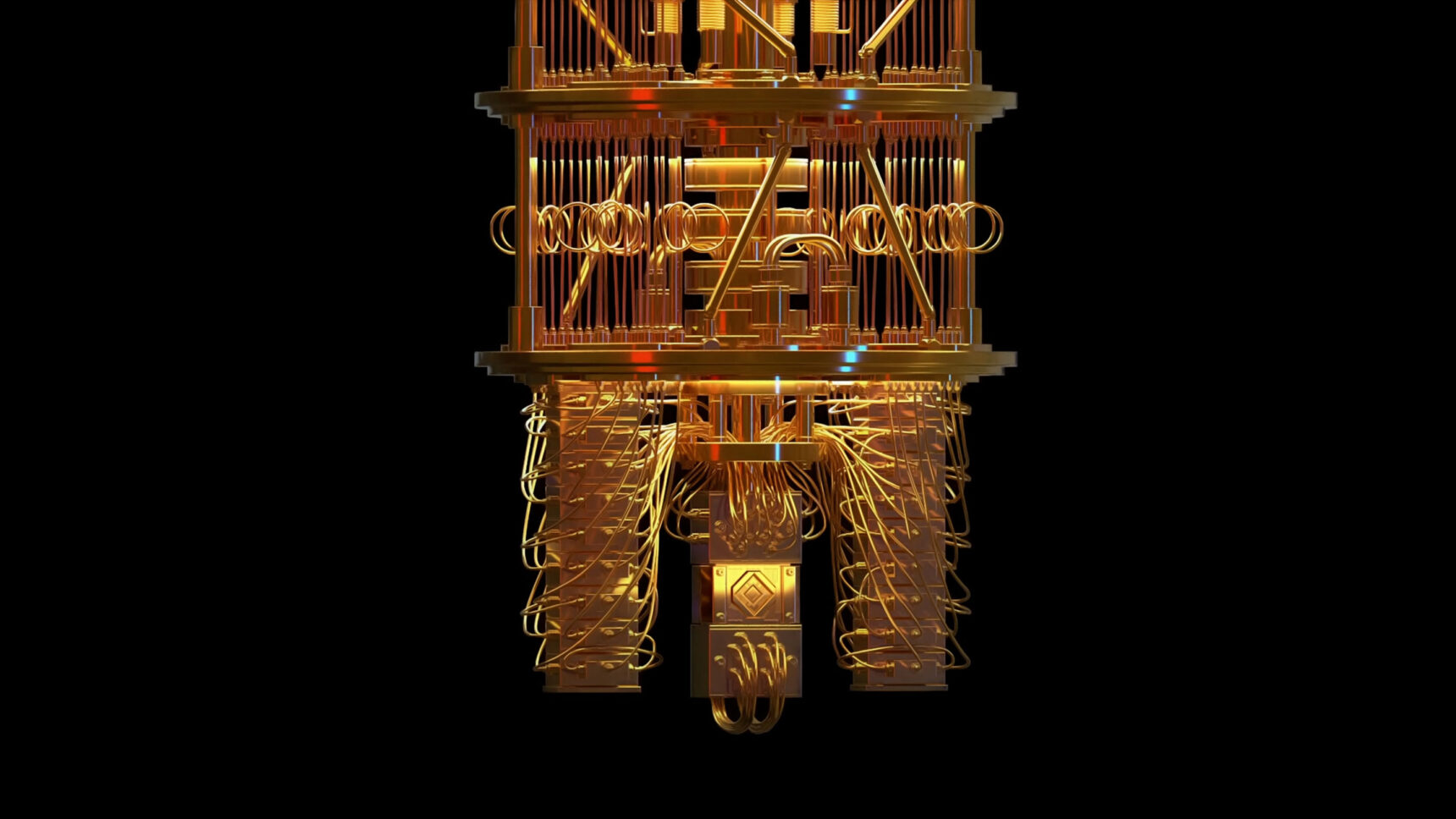
Two concepts dominate the conversation on World Quantum Day:
- Superposition: In everyday life, a light switch is either on or off—1 or 0. But in the quantum world, a particle can be both on and off at the same time. Only when we look at it does it pick a state. Quantum computers use this with qubits, which can do millions of calculations at once, giving them huge processing power.
- Entanglement: This is the “spooky” part. Two particles can become entangled so that their fates are linked. If you measure the state of one particle on Earth, you instantly know the state of its twin particle, even if that twin is on the other side of the galaxy. This phenomenon doesn’t just allow for mind-bending philosophy. Entanglement: This is the truly “spooky” part. Two particles can become linked so that whatever happens to one affects the other, even if they’re far apart. If you measure one on Earth, you instantly know the state of its partner, even if it’s across the galaxy. This isn’t just a wild idea—it could make totally secure communication possible. The expansion of IonQ’s quantum computer manufacturing facility, predicting the creation of thousands of jobs https . Lieutenant Governor Denny Heck made a bold statement at the event, arguing that quantum computing “will dwarf AI” in terms of historical impact https://www.geekwire.com/2026/world-quantum-day-serves-as-a-cause-for-computer-celebration/.
So why does this matter so much? It’s all about solving problems that were impossible before.
- Drug Discovery: Classical computers struggle to simulate molecules because molecules follow quantum rules. A quantum computer can map complex molecular structures perfectly, potentially reducing the time to discover new cancer drugs or vaccines from years to days.
- Climate Change: Quantum sensors can measure gravitational shifts to find underground carbon storage pockets or optimize battery chemistry for electric vehicles.
- Logistics: Quantum algorithms can solve complex routing problems instantly, potentially saving billions of dollars in fuel and shipping costs for global supply chainshttps://thequantuminsider.com/2026/04/14/why-world-quantum-day-matters-inside-the-push-to-make-quantum-technology-a-public-conversation/.
The Dark Side: The Cybersecurity Threat
But World Quantum Day isn’t just a celebration—it’s also a reminder to be careful. The same technology that could help cure diseases might also break the codes that keep our online information safe.

Currently, your bank transactions, medical records, and private emails are secured by encryption algorithms (like RSA). These algorithms rely on the fact that classical computers cannot factor large prime numbers quickly. A sufficiently powerful quantum computer, however, could crack this code in secondshttps://theprint.in/india/sisa-launches-cybersecurity-certification-programme-on-world-quantum-day/2904870/.
This has created a situation that security experts call “Harvest Now, Decrypt Later.” Hackers are already collecting huge amounts of encrypted data, hoping that, in five or ten years, quantum computers will let them crack it.To address this risk, World Quantum Day 2026 brought big changes in cybersecurity. In India, the company SISA started the “Certified Quantum Security Professional” program, the first official certification in quantum security. The aim is to train people to use Post-Quantum Cryptography (PQC), a new kind of encryption that even quantum computers can’t break.
A Global Movement: From Seattle to Saudi Arabia to Bangalore
One of the best things about World Quantum Day is that it’s a global, community-led event. It’s not about companies—it’s about science.
- The United States: Beyond the manufacturing news in Washington, the Senate Commerce Committee unanimously approved the National Quantum Initiative Reauthorization Act, ensuring federal investment flows into quantum research and development. https ://www.geekwire.com/2026/world-quantum-day-serves-as-a-cause-for-computer-celebration/.
- The Middle East: In Saudi Arabia, the 2026 celebration centered on the theme “Shape the Quantum Workforce.” Partnering with the King Abdulaziz City for Science and Technology (KACST), the event launched the “Quantum Hero’s Journey”—a metaverse-based immersive experience designed to teach children quantum concepts through interactive storytellinghttps://wcsiasc.org/events/iasc-world-changers-world-quantum-day-event-in-saudi-arabia-2026/.
- India: The state of Karnataka launched the first phase of its Quantum Ecosystem Roadmap, featuring a proposal for “Q-City” —a dedicated hub to connect academia (like the Indian Institute of Science) with startups and industry. Karnataka has earmarked a massive Rs 1,000 crore fund to build a $20 billion quantum ecosystem by 2035https://www.newindianexpress.com/states/karnataka/2026/Apr/16/karnataka-releases-first-phase-of-quantum-ecosystem-roadmap.
How to See Quantum in Your Daily Life
While fault-tolerant, even though fully reliable quantum computers are still a few years off, the first quantum revolution has already changed our lives. It brought us things like lasers and transistors. You don’t have to wait for the next breakthrough to see the benefits of quantum science.a smartphone, you rely on a transistor that operates via quantum tunneling. Every time you get an MRI or use a DVD player, you rely on nuclear magnetic resonance—a quantum phenomenon. Global Positioning Systems (GPS) rely on atomic clocks that use quantum superposition to maintain extreme accuracyhttps://jila.colorado.edu/news-events/news/jila-celebrates-world-quantum-day-2026https://thequantuminsider.com/2026/04/14/why-world-quantum-day-matters-inside-the-push-to-make-quantum-technology-a-public-conversation/.
Right now, the most advanced consumer quantum technology is in sensing. Quantum sensors are being used to measure brain activity and find underground minerals, all without big, noisy machines.
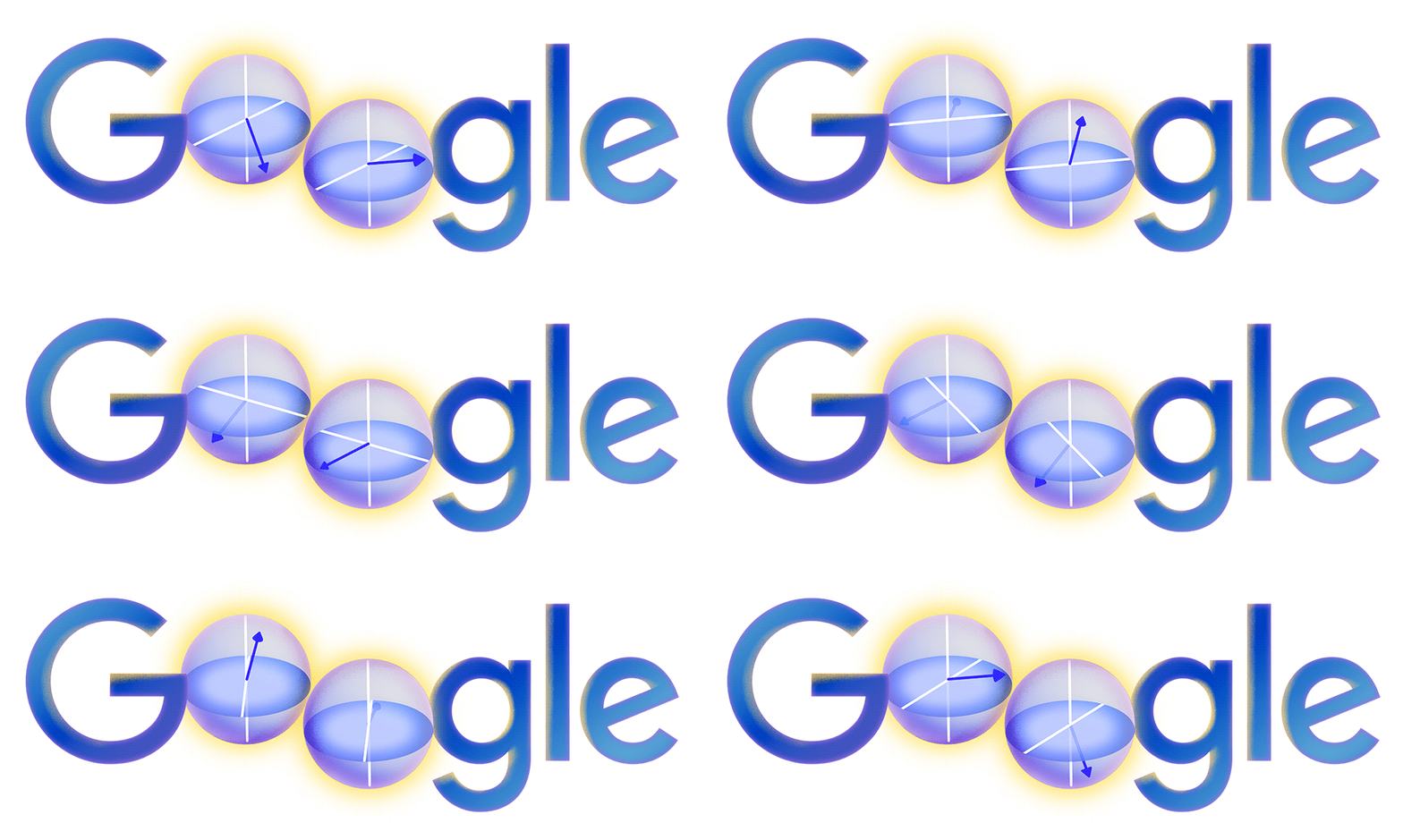
Google Celebrates World Quantum Day 2026 with a Second Doodle
The Road Ahead: Education and the “Quantum Workforce”
As World Quantum Day 2026 wraps up, one thing is clear: the science is ready, but there aren’t enough people trained to work with quantum technology. There’s a huge worldwide need for people who can program, build, and maintain quantum hardware.
Programs like Italy’s NQSTI “Quantum Marathon” and Slovakia’s eduQUTE are helping by introducing games like “Quantum Taboo” and “Entanglion” to high schools. The main idea is that you don’t need a PhD in physics to work in quantum technology—the field also needs engineers, software developers, ethicists, and salespeople.
Conclusion
World Quantum Day (4/14) isn’t just a smart reference to Planck’s constant. It’s a chance for people everywhere to pause and think about the Right now, we’re moving from classical physics to the age of quantum information. Over the next decade, how we protect data, find new materials, and use artificial intelligence will all change. The science may be complicated, but World Quantum Day has a simple message: the future isn’t set in stone—it’s full of possibilities, connections, and surprises, just waiting for us to explore.observe it.
So next time you see April 14 on the calendar, remember: it’s a day to celebrate the strange, appreciate the tiny, and get ready for a future that’s full of possibilities—until we see what happens.