
Why the Live-Action Movie Failed, and Why ‘Avatar’ Still Matters
On July 1, 2010, millions of kids convinced their parents to go to a midnight movie. They weren’t there for Inception or Toy Story 3. They wanted to see the magic of airbending come to life.
The lobby was full of excitement. Fans who grew up with Aang, Katara, Sokka, and Zuko remembered arguing at school about whether Iroh was the strongest or just the wisest. Many had felt real heartbreak during “Leaves from the Vine.” For them, the 2005-2008 Nickelodeon series was more than a cartoon—it was their Star Wars.
After two hours of M. Night Shyamalan’s The Last Airbender, the crowd left in stunned silence. For many, it was their first time feeling the pain of seeing something they loved misunderstood. This is the story of that movie, and why, fourteen years later, Millennials and Gen Z still treat the original series as sacred.
The History: A Fumble of Epic Proportions
To understand the disaTo see why the movie failed, you need to know how big the plans were. In 2007, after hits like The Sixth Sense and Signs, Paramount Pictures gave M. Night Shyamalan the job of turning Avatar: The Last Airbender into a huge live-action trilogy with a $150 million budget https://en.wikipedia.org/wiki/Avatar_(2010_film). was a fan; he said his daughter wanted to be Katara for Halloween, and he fell in love with the world https://en.wikipedia.org/wiki/Avatar_(2010_film). Yet, almost immediately, red flags appeared. The original creators, Michael Dante DiMartino and Bryan Konietzko, were given executive producer credits but later revealed they had a “big falling out” with the studio. Their input was ignored https://en.wikipedia.org/wiki/Avatar_(2010_film)https://newsapp.abc.net.au/news/2024-02-28/avatar-the-last-airbender-review-netflix-adaptation/103513380.

The casting was the first visible fracture. The anCasting was the first big problem. The animated series celebrated Asian, Inuit, and Indigenous cultures and honored Eastern spirituality and martial arts https://time.com/6696684/avatar-last-airbender-asian-influences/?itm_source=parsely-api. But the movie chose white actors (Nicola Peltz, Jackson Rathbone) for the water tribe siblings, who were meant to be dark-skinned and Inuit-coded. Aang was played by Noah Ringer, a white newcomer, and Zuko, the main villain, was played by Dev Patel, an Indian actor who did not match the East Asian-coded character https://en.wikipedia.org/wiki/Avatar_(2010_film)https://newsfeed.time.com/2010/07/01/the-last-airbender-skewered-by-critics-can-it-be-that-bad/print/.Shyamalan removed the humor, the sarcasm (Sokka was no longer funny), and the emotional beats. He famously removed the “slapstick ” stuff for little kids and changed the pronunciation of nearly every character’s name https://en.wikipedia.org/wiki/Avatar_(2010_film). When the film was released, it was a critical black hole. It currently holds a 5% rating on Rotten Tomatoes. Critics called the 3-D “execrable,” the acting “wooden,” and the script a disaster https://newsfeed.time.com/2010/07/01/the-last-airbender-skewered-by-critics-can-it-be-that-bad/print/. Dev Patel later admitted he saw “a stranger on the screen” and that the experience taught him “the power of no” https://comicbook.com/comicbook/news/dev-patel-shares-regrets-over-avatar-the-last-airbender-film/.
The Betrayal: Why It Hurt So Much
If the movie had only been a bad action film, people would have forgotten it. But it wasn’t just generic—it felt completely wrong.

For kids who grew up in the late 90s and early 2000s, seeing themselves on screen was rare. We had shows like Dragon Ball Z and Sailor Moon, but those came from overseas. Avatar: The Last Airbender was made in America and treated Asian and Indigenous ideas with real respect. It wasn’t just about martial arts—it explored Chi, the balance between enlightenment and duty, and the pain of imperialism https://time.com/6696684/avatar-last-airbender-asian-influences/?itm_source=parsely-apihttps://www.magzter.com/nl/stories/news/Time/FORGING-AN-ASIAN-EPIC.
Seeing those characters whitewashed wasn’t just about looks—it felt like erasing something important. One user review said the movie took a “fantastic show and made it into something unbearably mediocre” https://www.imdb.com/review/rw2278066/?ref_=ur_urv. The film didn’t just fail; it felt like an insult to the fans.
Shyamalan defended the film by saying, “I made it for nine and 10-year-olds,” https://comicbook.com/comicbook/news/dev-patel-shares-regrets-over-avatar-the-last-airbender-film/. But fans in their twenties knew that wasn’t true. The original show was for them—it tackled genocide, loss, disability, and abuse. Zuko’s redemption story is seen as one of TV’s best because it showed kids that trauma doesn’t have to shape their whole future. The movie reduced all that depth to simple explanations.
The Emotion: Why the “20’s People” Won’t Let Go
So why is Avatar: The Last Airbender even more popular in the 2020s? Why did it hit number one on Netflix in 2020, and why is it still trending on TikTok https://www.alibaba.com/product-insights/why-are-nostalgic-cartoons-like-avatar-the-last-airbender-trending-again.html?

The answer is emotional. The reason is simple: emotional gravity.Today (Gen Z and younger Millennials) are inheriting a world on fire—climate change, political instability, and a sense of helplessness. Avatar offers a solution that feels ancient and necessary: balance.
- The show’s morality is complex. Unlike the 2010 movie, which was just a basic “good vs. evil” story, the series asks tough questions. Is it ever right to kill to save the world? Are nations evil, or just their leaders? How do you heal from trauma passed down through generations? Aang’s struggle to stay true to his pacifism while carrying the world’s problems is a lesson in empathy https://www.alibaba.com/product-insights/why-are-nostalgic-cartoons-like-avatar-the-last-airbender-trending-again.html.
- The “soul” of the story is hard to capture. The 2024 Netflix live-action series tried to fix what the Shyamalan movie got wrong. It improved the casting and the bending, but many fans still thought it felt empty. The BBC said the Netflix version was “a facsimile,” with the plot but missing the “visual character” and heart https://www.bbc.com/culture/article/20240223-avatar-the-last-airbender-why-the-much-hyped-new-netflix-show-is-the-worst-of-remake-culture. The 2010 movie is the best example of this problem: it looked dark and serious, but it lost its warmth.
- Nostalgia brings comfort. For people in their 20s, watching Avatar again feels like seeing an old friend. It’s a safe place. In a world that feels out of control, the rules of bending are easy to understand. Iroh’s advice (“It is important to draw wisdom from many different places”) feels like therapy https://www.alibaba.com/product-insights/why-are-nostalgic-cartoons-like-avatar-the-last-airbender-trending-again.html.
The Verdict
The Last Airbender (2010) isn’t just a bad movie—it’s a perfect example of what not to do. It shows that you can’t force a fandom to happen. You can’t turn a spiritual, martial-arts story into a soulless summer blockbuster and expect it to work.
The movie wanted to be the next Harry Potter. Instead, it became a warning, teaching a whole generation to guard their childhood memories.
People in their 20s love Avatar because it taught them about being human. Shyamalan’s movie taught them to lower their expectations. Even now, if you bring up “The Movie” in an Avatar forum, everyone reacts the same way. Some wounds, like those from firebending, never really heal.
Avatar: The Last Airbender Season 2
In the sprawling, ambitious landscape of prestige television, there is a single season of a children’s cartoon that stands as a monolith of storytelling. It is not Breaking Bad. It is not The Sopranos. It is Book Two: Earth of Avatar: The Last Airbender.
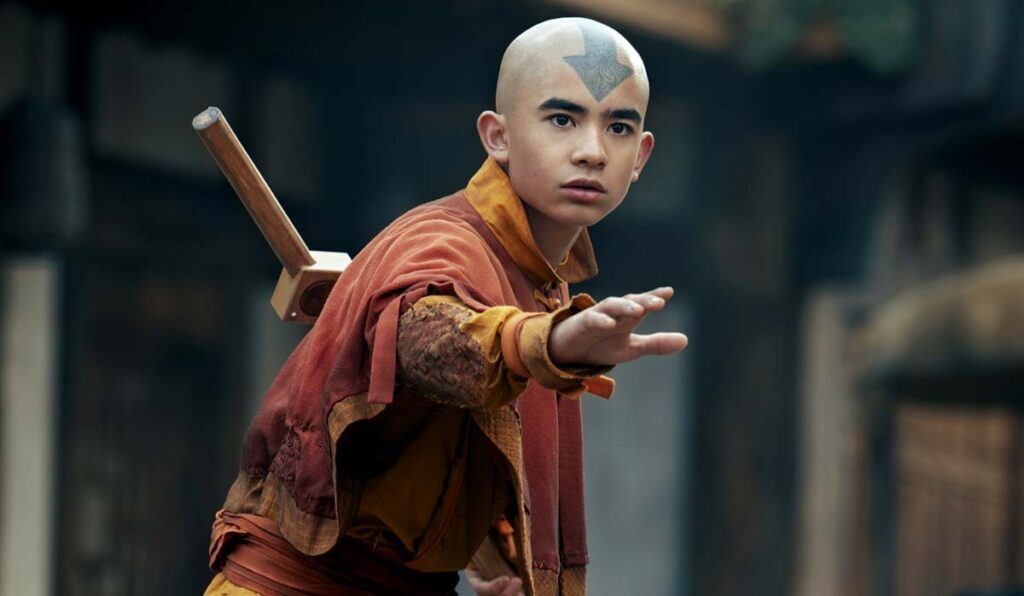
While Season 1 introduced us to the world, Season 2 broke us and then rebuilt us. Originally airing in 2006https://avatar.fandom.com/wiki/Book_Two:_Earth, this 20-episode arc took a show about a boy with arrows on his head and turned it into a Shakespearean tragedy about trauma, identity, and the weight of the world. For the 20-somethings who grew up with it, Book Two isn’t just a season of television; it is the emotional core of their childhood.
This is the story of how Avatar grew up—and forced its audience to grow up with it.
The Setup: The Calm Before the Storm
Book Two: Earth picks up immediately after the cataclysmic finale of Book One. Aang has survived the North Pole but is terrified. The season premiere, “The Avatar State,” opens not with a victory lap but with a nightmare. Aang sees a vision of himself as a rage-fueled monster destroying everything in his pathhttps://avatar.fandom.com/wiki/Avatar_Extras_(Book_Two:_Earth). This is the central thesis of Season 2: Power without control is destruction.
The show ditches the “monster of the week” formula. The goal shifts from mere survival to a desperate race against time. Aang needs to find an earthbending teacher. The Fire Nation is industrializing for war. Lurking in the shadows is a new villain far scarier than Zuko ever was.
Enter Princess Azula.
The Villain Who Changed the Game
If Zuko was a tragic, angry puppy, Azula was a precision-guided missile. Voiced with chilling perfection by Grey DeLisle, Azula is not just evil; she is a prodigy. She is the golden child who weaponizes perfectionhttps://avatar.fandom.com/wiki/Avatar_Extras_(Book_Two:_Earth). Her introduction in the first episode raises the stakes immediately. She commands lightning, something Zuko cannot do. She has two deadly friends, Mai and Ty Lee. She doesn’t scream. She smiles.
For the kids watching in 2006, Azula was the first time they encountered a villain who was genuinely psychologically terrifying. She represents the pressure of high expectations, the toxicity of perfectionism, and the cruelty of a family that values power over love.
The Blind Bandit: Toph Beifong
You cannot discuss Book Two without discussing the seismic shockwave that is Toph Beifong.
Introduced in episode six (“The Blind Bandit”), Toph is a tiny, blind, barefoot girl who routinely beats grown men in underground earthbending wrestling ringshttps://avatar.fandom.com/wiki/Book_Two:_Earth. She is rich, sheltered, and utterly defiant. She joins the Gaang not because she is asked nicely but because she wants to get away from her overprotective parents.
Toph changed everything. She wasn’t the gentle, wise mentor Aang expected. She was abrasive, sarcastic, and brutally honest. When Aang struggles to learn earthbending because he “feels the flow” like an airbender, Toph yells at him to “stand his ground.” She teaches him that earth is the element of substance. You don’t dodge a rock; you face it head-onhttps://nerdist.com/article/avatar-the-last-airbender-bitter-work-episode-underrated/?r_page=2&noamp=mobile&.
For the 20-somethings of today, Toph is a hero of accessibility and attitude. She refuses to be defined by her disability. “I see with earthbending,” she says. “It’s a different way of seeing.” That lesson, that your limitations can become your greatest strengths, is a mantra for a generation navigating a difficult world.
The Anatomy of Grief: “Zuko Alone” and “Tales of Ba Sing Se”
While Aang learns to bend rocks, Zuko is having the best character arc in animation history.
Book Two features “Zuko Alone,” an episode that is essentially a standalone western. Stripped of his crew, crown, and uncle, Zuko wanders the Earth Kingdom. He helps a farmer’s son and eats dinner with a family. For one brief, beautiful moment, he is just a kid. But when Earth Kingdom soldiers attack, Zuko instinctively firebends to save the boy. The family he just ate with recoils in horror. The little boy who looked up to him spits at his feet: “You’re a monster.”
It is a devastating moment of rejection. Zuko chooses to be good, and the world punishes him for who he is. That is real tragedy.
Then there is “The Tales of Ba Sing Se.” In a season full of action, this anthology episode is the quiet heartbreaker. Iroh, the wise old general, spends his day helping strangers: a mugger, a crying child, and a depressed man. He sings a sad little song. He sits on a hill under a tree. He pulls out a picture of his dead son, Lu Ten, and sings “Leaves from the Vine.”
For the voice actor, Mako, this was his final performance before his death from cancerhttps://avatar.fandom.com/wiki/Book_Two:_Earth. The episode is a memorial. When Iroh’s voice cracks, the audience didn’t just cry; they mourned. That episode taught a generation that it is okay for grown men to cry. It taught them that grief is not weakness; it is love persevering.
The Corruption of Utopia: Ba Sing Se
The second half of the season takes place in Ba Sing Se, the “Impenetrable City.” It is a utopia—or so it seems. The walls are high. The tea is hot. But beneath the surface, the Earth Kingdom is rotting.
The Dai Li (secret police) brainwash dissidents. The Earth King is a puppet on a throne, unaware a war is going on. The mantra is drilled into refugees: “There is no war in Ba Sing Se.”https://www.bartleby.com/essay/Analysis-Of-Avatar-The-Last-Airbender-PKNCF476UA6
For teenagers just For teenagers learning about propaganda, censorship, and political corruption, this was a wake-up call. The show explicitly tackled how governments lie to citizens to maintain the status quo. It was a children’s show airing on Nickelodeon and teaching media literacy. Destiny: The Gut Punch Finale
Most seasons of television end with a victory. The Last Airbender ended Book Two with a massacre.
In the two-part finale, “The Guru” and “The Crossroads of Destiny,” Aang faces an impossible choice. To master the Avatar State, he must let go of his earthly attachment: Katara. But just as he is about to unlock the final chakra, he sees Katara in danger. He abandons enlightenment to save his friend.
He loses.
Azula shoots him with lightning. Zuko, who had finally found peace in Ba Sing Se, betrays his uncle and sides with his sister. The Earth Kingdom falls. Katara escapes with Aang’s lifeless body.
The final shot is Katara holding a dead boy in her arms, crying over the crystal catacombs of Ba Sing Se.
The good guys lost. Completely.
For kids watching in 2006, this was their Empire Strikes Back moment. The hero didn’t win because he had a pure heart. He lost because he was human. He loved too much. And the villain walked away victorious.
Why the 20s Love It (An Emotion)
In the 2020s, we live in an era of “prestige TV” that is cynical, dark, and morally grey. Avatar: Book Two offered something different: earnest darkness.
It didn’t mock its characters for having feelings. It didn’t use irony as a shield. When Aang lost Appa (the kidnapping of the bison in “The Library” is one of the most traumatic episodes for young viewers), the show did not cut away. It sat in the grief. Aang couldn’t sleep. He yelled at his friends. He almost killed people. The show validated that angerhttps://widgets.trakt.tv/shows/avatar-the-last-airbender/seasons/2/comments/all/likes_30/#comments[citation:11].
Book Two is the season where the training wheels came off. It is about the realization that the adults in the room are either corrupt, incompetent, or dead. The kids have to save the world, and they are terrified.
For the Millennials and Gen Z-ers who rewatch this show obsessively, Book Two is therapy. It is the validation that life is hard, love is complicated, and sometimes, even when you do everything right, the bad guy wins. But you get back up anyway.
Conclusion: The Standard
Netflix is currently attempting to adapt this season into live-actionhttps://www.stylerave.com/netflix-avatar-the-last-airbender/?utm_source=rss&utm_medium=rss&utm_campaign=netflix-avatar-the-last-airbender. They have cast Miya Cech as Toph. They are spending millions of dollars. But they will never replicate the magic of 2006.
Why? Because you cannot CGI the soul of “Leaves from the Vine.” You cannot motion-capture the raw rage of “Zuko Alone.” You cannot write a more perfect villain than Azula smiling as lightning leaves her fingertips.
Book Two: Earth is not just the best season of Avatar. It is the reason animation is not a genre, but an art form. It is the reason we cry over fictional characters. It is the reason a show that ended in 2008 remains on Netflix top 10 lists in 2026.
It is an emotion. And it is eternal.